

Review: Mass
[Donmar Warehouse || April 18th to June 6th 2026]

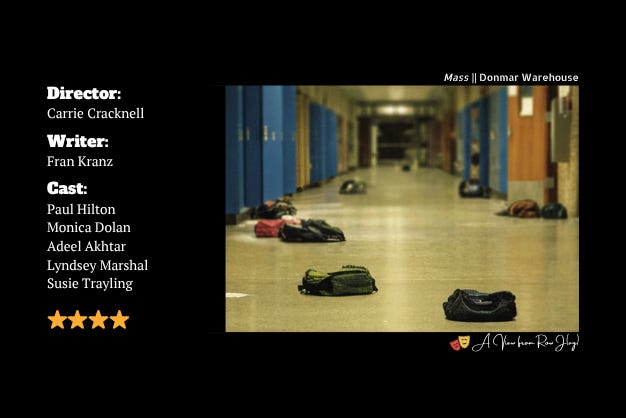
The theatre of simplicity isn’t a lost art, but it sometimes feels like it’s been neutered by an obsession with minimalism. Mass, Fran Kranz’s stage adaptation of his 2021 film of the same name about a meeting between two sets of parents - one whose son committed a school shooting, the other whose son was one of the victims - works so well because it is simple. It’s words on a page brought to life by four actors who don’t just portray their characters but embody them. It’s a text of raw sentiment directed inwards and outwards that is anchored firmly in no-frills realism, with a specificity of location and universality of emotion.
In the five years since Fran Kranz brought this story to the big screen, nothing has changed. Indeed, if anything, things have regressed. After all the thoughts and prayers, all the calls to action, the protests, the petitions, the congressional hearings and the endless handwringing and promises from politicians that things will be different, so far this year, as of May 14th 2026, there have been 73 school shootings across the States, resulting in 148 injuries or deaths, and 1,231 (yes, that is one thousand, two hundred and thirty one) school shootings in the years since the film was released1. What a damning record.
The more it happens - the more American schoolchildren are slaughtered by their friends and classmates, encouraged and pardoned by the blood-soaked gun lobby, who can get a fantastic bargain on most politicians and lawmakers these days - the less anyone seems to care. Maybe everyone’s jaded, or maybe they’ve just given up. But every time it happens, and every time meaningful, preventative action fades ever further into the distance, there is a wave that tears through the walls within which the latest senseless murder took place; a wave that obliterates the families and communities for whom this is so much more than numbers on a chart. Because, for them, this is the sons and daughters and neighbours and friends that they will never see again.
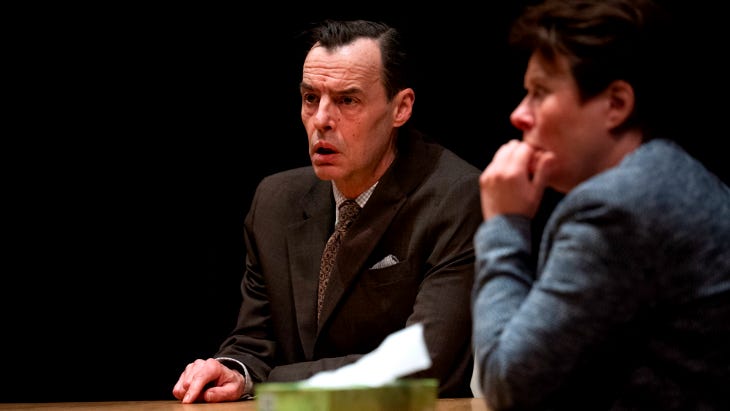
For Kranz, who has adapted his 2021 screenplay and moved the action to the present day, the political is personal and so too is the personal political. They’re inescapably intertwined. A discussion about gun rights isn’t theoretical or ideological, it’s about whose child needs to die next. Mental health isn’t just labels, it’s people. It’s the perpetrators and the survivors, and what could’ve been prevented and what still isn’t being prevented. And then there’s guilt, neglect, shame, blame culture, social media, “broken” families, the internet, video games and our culture’s obsession with might and displays of violence. These aren’t just concepts but rather they permeate every aspect of people’s lives, tainting and damaging us all.
The sense not just of families but an entire country wracked with inertia pulses through the play’s veins. Posters about mental health awareness litter the noticeboards in the background of the set, but nothing changes. Characters meet and argue and rage and forgive, but nothing changes. The action is moved from 2021 to 2026 and nothing changes. Yet Kranz isn’t despairing or cynical. He’s honest, sure, but this isn’t a work that is resigned to tragedy or accepting of how things are but one that recognises the sheer scale of the challenge we must confront.
The set - wide and deep, particularly for the Donmar - is symbolic of this scale. The vast majority of the action occurs in the centre, around a small table, where the characters sit and talk, yet the stage is sprawling, as though they are surrounded by emptiness. Occasional interruptions hint at the endless march of life, even in the face of overwhelming tragedy, while the centre of the stage rotates, slowly and almost imperceptibly, mirroring the glacial pace of progress while simultaneously allowing the audience to look each character in the eye and see the discussion unfold from their different perspectives.
The four central performances are all magnificent, and each deserves plaudits for how well they capture the pain and the turmoil of their respective characters. Dolan and Marshal are the emotional heart of it, and their characters’ journeys towards acceptance and forgiveness is powerfully realised. Hilton, meanwhile, plays things a little more coolly; his character is complicated and difficult to warm to, but Hilton manages to find something in him with which we can properly sympathise. For all of the rage and the hysterics that define how these characters interact, there is a real subtlety to their tics, mannerisms and expressions, that allows us to fully invest in them and believe in the heartache they have endured.
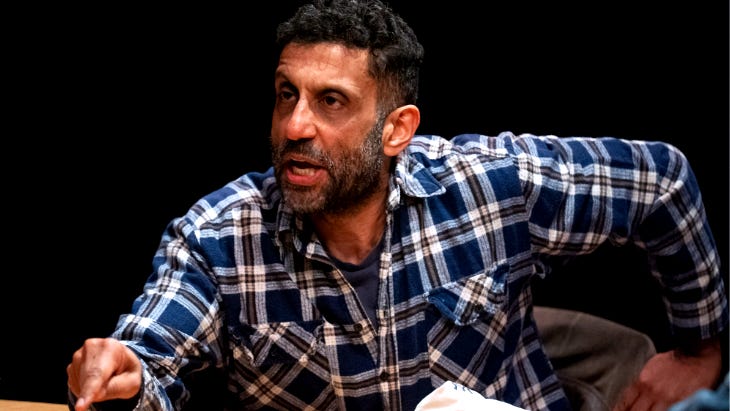
Adeel Akhtar operates on another level entirely, however. Dolan, Marshal and Hilton are very good; Akhtar is exemplary. He plays Jay, the victim’s father, as a grenade just waiting to explode and destroy everything. He is fidgety and defined by anger, yet there is such nuance to how he captures all of his emotions that when he finally erupts, it feels all the more devastating. As he describes what was done to his son and the ripple effect on the family, he exudes such guttural pain, discussing something so unimaginable and inexplicable and yet so horrifically common.
This is just excellent theatre. It’s thoughtful, precise and anguished, yet it’s never overdone or manipulative. It suits the Donmar, which is an intimate space, well, and Cracknell’s direction never overwhelms or distracts from the text. There are many issues with the pacing - it almost feels a little too short, interestingly - and the minor characters are a little clumsily written but for the most part, this is powerful, provocative stuff that dazzles in the hands of the four excellent leads.
Tickets for Mass are available here.
https://k12ssdb.org/all-shootings