

Review: High Noon
[Harold Pinter Theatre || December 17th 2025 to March 6th 2026]

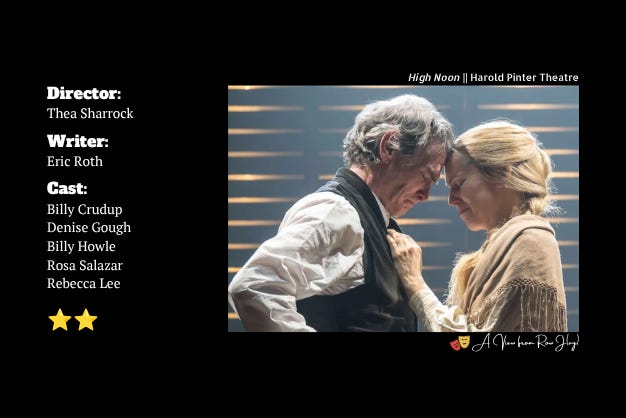
Of all the films to be given the stage adaptation treatment in the past few years, Fred Zinnerman’s classic Western High Noon was never the likeliest of contenders, though nor is it the strangest project of late. As London theatres become ever more stuffed with theatrical takes and musical twists on films we all know and love in a desperate attempt to get as many people through the doors as possible, an unavoidable sense of despondency descends as one is left to ponder what will be next. An all-singing, all-dancing adaptation of The Texas Chainsaw Massacre, perhaps, or maybe Jamie Lloyd’s postmodernist spin on Sophie’s Choice, starring Sabrina Carpenter as the eponymous guilt-ridden mother?
It is to the detriment of us all that the theatre ecosystem is so polluted with these adaptations, yet their popularity and, in some cases, great critical acclaim suggests that there is a real clamour for them. Shows like Back to the Future, The Devil Wears Prada and… errr… The Hunger Games on Stage show little sign of slowing down, sometimes in spite of a critical panning, and though this is less true of Thea Sharrock’s High Noon, which is far from a sell out and has received a pretty mixed reception, it’s clear that this trend of star-led adaptations of popular films is set to continue for the foreseeable future.
So, what then of High Noon? Though undeniably “star-led”, High Noon at least boasts reliable old hands in the form of Gough and Crudup, both of whom are familiar with the London stage and can reliably ring in great performances at a moment’s notice. Gough in particular is often excellent, as evidenced by her turns in Angels in America and People, Places and Things, and Crudup’s recent performance in David Cale’s one-man show Harry Clarke was quite the revelation. Sharrock, likewise, is no stranger to the stage, having been the youngest ever artistic director of Southwark Playhouse, while Eric Roth, though much better known as a screenwriter, has some real gems (not including Extremely Loud and Incredibly Close…) under his belt.
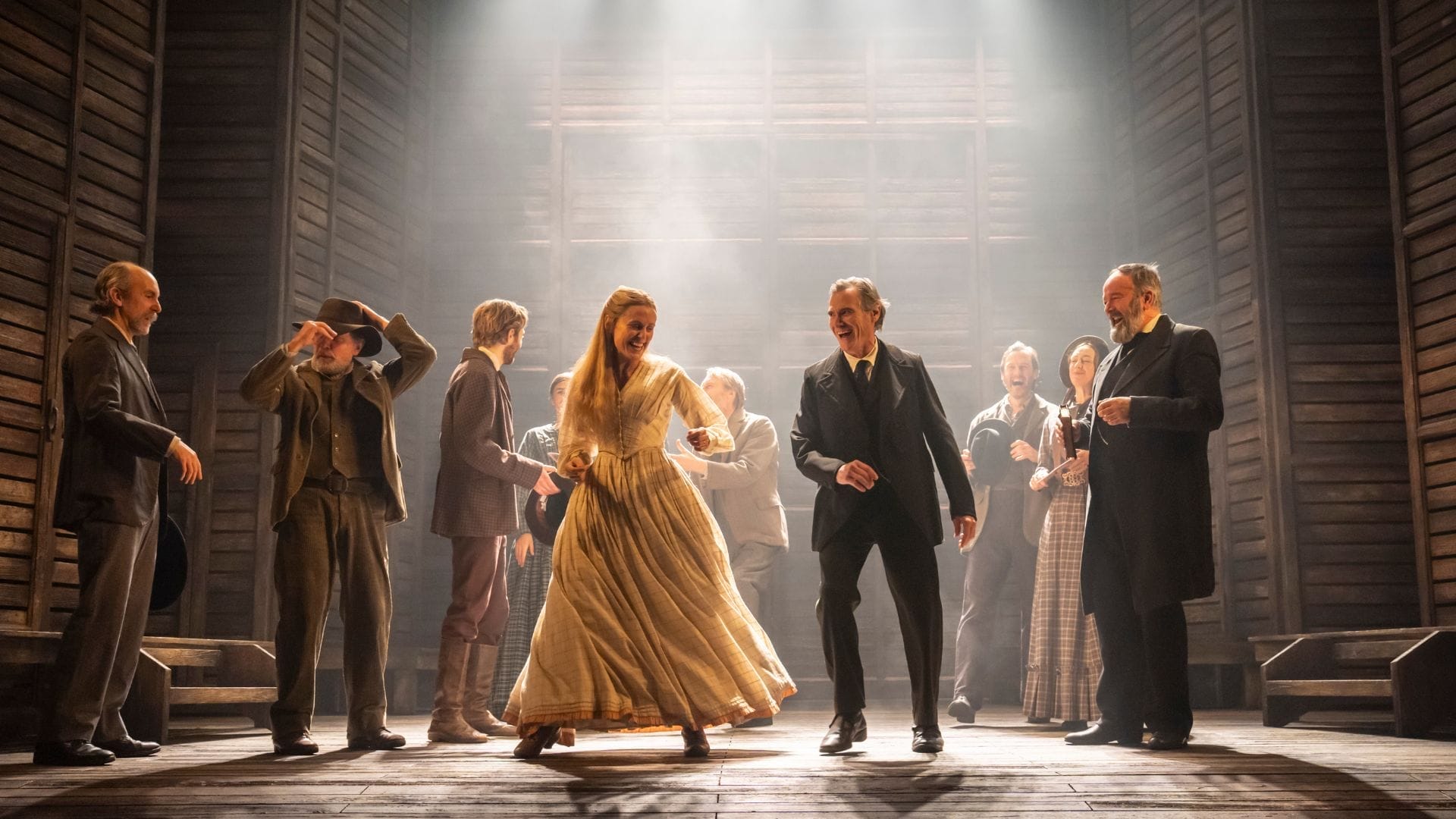
With all of these components working in tandem, it’s jarring how lifeless and stilted High Noon is. It has an amateurish air to it, as though it’s incomplete. Directorial, design and performance decisions feel asynchronous with one another, resulting in an incoherence that haunts the production at every turn. A clock, high above the stage, appears to count down to an inevitable moment of reckoning in the final act, except it keeps stopping and starting, stripping away what little tension has been built up. Scene transitions are accompanied by anachronistic musical interludes that baffle far more than they entertain, while minor but nonsensical alterations are made to the narrative and the dialogue, undermining what is supposed to be a story about stubborn conviction and the inefficacy of moral certainty.
Worse still, under Sharrock’s limp direction the performances are erratic and unconvincing. Crudup is just about believable as the town marshall, and he’s able to muster up enough emotional heft to prevent the show from collapsing down around him, but everyone else is mediocre, bordering on actively bad. Gough is uncharacteristically rotten, admittedly in a thankless role, as the marshall’s wife, and Billy Howle - another great stage actor - has little presence as the marshall’s deputy. Rosa Salazar’s performance is laboured - though again, the role is thankless - and the ensemble’s accents seem to cover the length and breadth of a continent, which further distracts and baffles.
There are a few effective the moments here: the moment of High Noon itself, as a train pulls into the station, filling the stage with steam, is well done, and a scene in a church where the congregation attempt to justify their dishonour and cowardice packs some dramatic power. Alas, it all amounts to little when the play can’t get a grip on what it wants to say or how it wants to say it. An air of embarrassment hangs over the production, as though the ensemble know it isn’t very good, which might explain why they’re all just going through the motions, and as it all draws to an end, the overriding feeling is one of ennui.
Just watch the film.